CIMEL-GRASP alliance

CIMEL joins the GRASP Earth group, bridging space-to-ground atmospheric monitoring

Keywords: Alliance · GRASP Earth · NewSpace · Atmospheric monitoring · Polarimeters · Air quality · Climate · Earth observation

CIMEL and GRASP are joining forces within GRASP Earth to accelerate a new generation of atmospheric environmental monitoring, from space down to reference ground observations. By combining CIMEL’s expertise in high-precision scientific instrumentation with GRASP’s advanced retrieval and data processing capabilities, the alliance aims to deliver actionable information for climate research, meteorology, air quality and environmental decision-making.

Monitoring atmospheric composition, including aerosols, gases and clouds, is essential for public health and climate applications and it also supports key satellite surface imagery uses. Yet capturing a reliable picture of a complex and rapidly changing atmosphere requires multiple instrument types and a consistent processing approach, across scales ranging from local to global and from the surface to the upper atmosphere. GRASP Earth’s ambition is to bring together ground based accuracy, satellite coverage and powerful inversion algorithms into coherent measurement and processing chains that users can trust.

As part of the alliance, CIMEL will contribute its industrial know-how for spaceborne instrumentation while continuing its current operations and collaborations with partners and customers to build robust end-to-end data product chains.

Resources

Press release – CIMEL-GRASP alliance

The NewSpace pioneer in atmospheric environmental monitoring, GRASP Earth, strengthens its capabilities through an alliance with CIMEL.

CIMEL’s entry into the GRASP Earth group enhances the integration of ground- and space-based atmospheric observations, which is key to delivering scientifically validated data for climate, air quality, and environmental decision-making.

Lille, Paris, 5 February 2026 – GRASP and CIMEL ELECTRONIQUE today announced their strategic alliance, shaping the GRASP Earth group as the NewSpace leader in atmospheric environmental monitoring. By integrating CIMEL’s expertise in scientific instrumentation with GRASP cutting-edge data processing—and building on the proven success of its GAPMAP constellation demonstrator—GRASP Earth will bridge ground-to-space monitoring of the atmosphere. This will enrich local and global Earth Observation and provide actionable data for climate research, meteorology, air quality, and environmental protection, empowering scientists, space agencies, cities, and industries with unprecedented accuracy and scientifically validated insights.

Monitoring atmospheric composition, aerosols (particles), gases and clouds, is critical for climate, meteorology, air quality and public health, as well as for vital satellite surface imagery applications. Yet it is necessary to leverage several hi-tech instrument types as well as high performance synergetic data analysis to provide a relevant picture of the complex and moving Earth atmosphere system at all scales, from local to global, and from the surface to the upper atmosphere.

With the alliance, GRASP Earth aims to become a global leader in atmospheric monitoring. By integrating CIMEL’s renowned expertise in ground-based reference instrumentation and deploying its own GAPMAP constellation—equipped with proprietary multi-angle polarimeter technology—GRASP Earth pursues a clear vision: combining ground-based precision, global satellite coverage, and advanced retrieval algorithms to deliver end-to-end measurement and processing approaches that ensures scientifically validated data of atmospheric composition.

This alliance is the natural next step after years of working side by side in a field where our strengths align perfectly. For our partners and customers, it means even more powerful solutions—combining CIMEL’s instruments with GRASP cutting-edge algorithms. And for us, it’s a proud milestone: expanding our expertise into NewSpace instrumentation. A thrilling new chapter for CIMEL!”, Didier Crozel, CEO of CIMEL ELECTRONIQUE stated.

Within the alliance, CIMEL will extend its industrial expertise to manufacture the satellite borne polarimeters in its facilities in Paris. “This strategic move not only perfectly complements GRASP’s current product catalog with solutions for monitoring the Earth from ground and space—all powered by our algorithms—but also reinforces our position in Europe, adding key industrial capabilities in France.”, David Fuertes, CEO of GRASP Earth highlighted. Both companies will pursue their current operations and at the same time join forces, collaborating with partners and customers to harness holistic observations from the surface to the orbit and power operational atmospheric data chains at local, regional and global scales.

This alliance reinforces GRASP Earth’s unique global positioning—grounded in France’s heritage in atmospheric sciences and Earth Observation—while advancing French and European leadership and autonomy in the NewSpace industry and environmental monitoring.

About GRASP Earth

GRASP Earth is a pioneer in atmospheric monitoring, leveraging its advanced algorithms to transform measurements into detailed information about physical properties of the Earth’s atmosphere and surface. Its vision is to integrate ground- and space-based observations—including its own GAPMAP constellation—to deliver a comprehensive, holistic view of aerosols, gases, and clouds, that empowers climate scientists, environmental regulators, industries, and local governments to better monitor, understand and act.

Website: www.grasp-earth.com

About CIMEL ELECTRONIQUE


CIMEL is a global leader in atmospheric instrumentation, designing and manufacturing high-precision instruments for ground-based and spaceborne applications. With decades of expertise, CIMEL’s solutions are trusted by scientific networks and space agencies worldwide. In particular, more than 600 CIMEL photometers permanently run in AERONET, the worldwide reference aerosol observation network, federated by NASA. The company’s instruments support critical applications in climate research, air quality monitoring, and satellite calibration.


Website: www.cimel.fr

Press contacts

New CE710 Raman LiDAR

Pioneering Aerosol Remote Sensing: LOA and CIMEL’s Journey with the CE710 LiDAR for ACTRIS

Keywords: LiDAR, Aerosols, monitoring, remote sensing, ACTRIS, Raman.

The Laboratoire d’Optique Atmosphérique (LOA) at the University of Lille, in collaboration with CIMEL, focuses on studying clouds, aerosols, gases, and their interactions with radiation, utilizing advanced remote sensing instrumentation for experiments, observations, and modeling. LOA brings its expertise to ACTRIS as the Quality Assurance and Control Lead, playing a crucial role in maintaining precise and reliable photometric aerosol measurements.

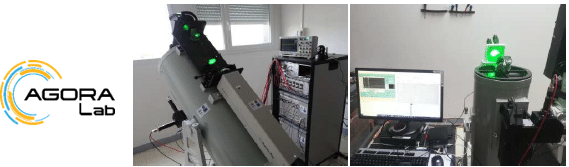
Since 1991, LOA and CIMEL have collaborated to advance and refine photometry techniques for measuring aerosols and water vapor. This collaboration was at the origin of the NASA AERONET planetary network, built with the CIMEL sun/sky/lunar photometers for over three decades. In 2005, building on this success, they extended their cooperation to include aerosol LiDAR technologies. Finally, in 2020, LOA and CIMEL established a joint research laboratory, AGORA-Lab, to develop advanced remote sensing technologies, including Lidars and photometers, and to combine them for cutting-edge performance.

LiDARs provide high-resolution vertical profiles of aerosols and clouds, while photometers offer column-integrated aerosol optical properties. By combining these measurements, calibration, quality control and retrievals are enhanced, leading to better quantification and characterization of aerosols and higher-level data products.

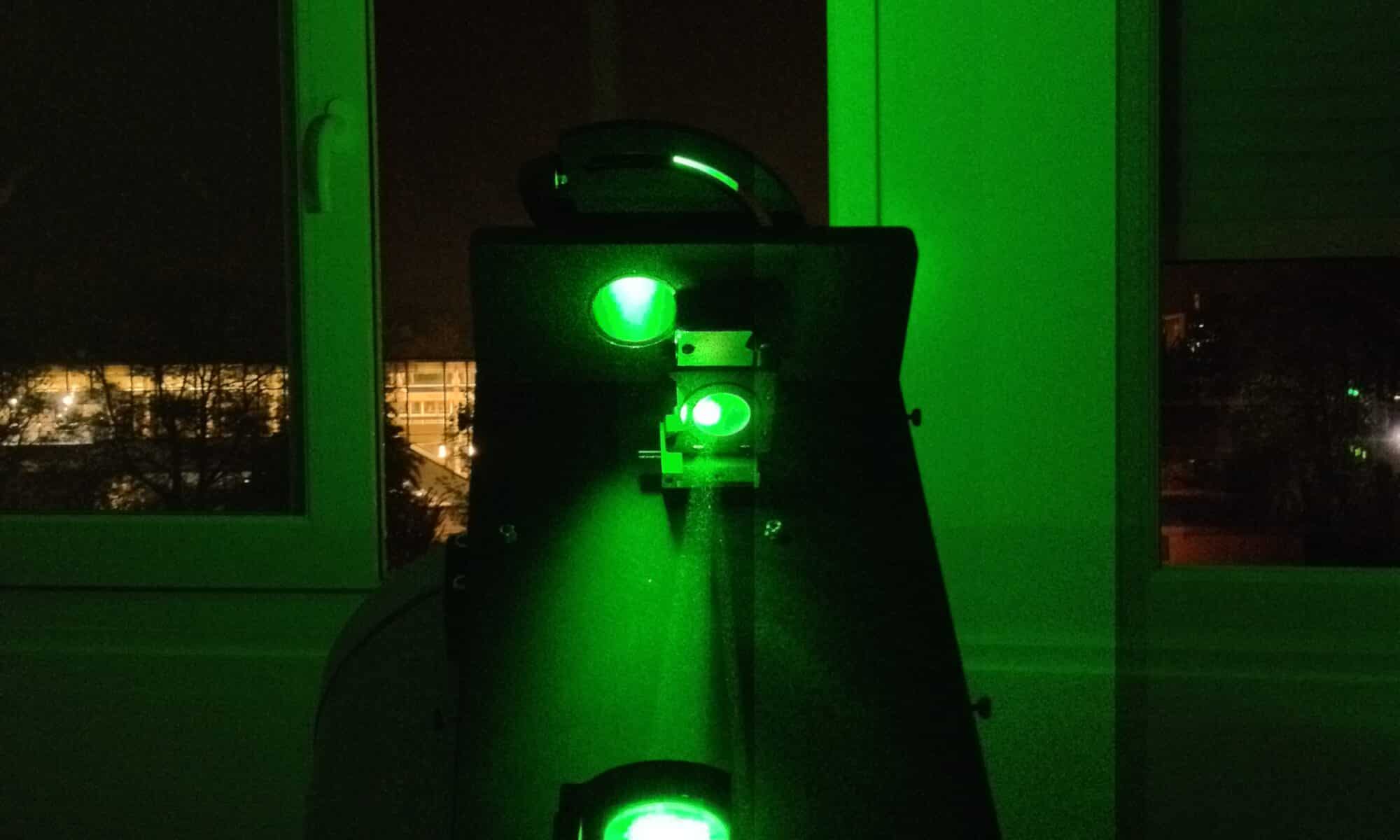
Since 2012, CIMEL and LOA have collaborated on developing the CE710 LiDAR, a high-power, multi-spectral Mie-Raman-Fluorescence LiDAR, spearheading significant advancements in aerosol measurement capabilities. The first version, called LILAS, was set up on the ATOLL platform (Atmospheric Observatory of Lille) and has been part of ACTRIS since 2015.

LOA and CIMEL continuously advance the industrialization and validation of the CE710 LiDAR range, making it a cost-efficient, modular solution that is ACTRIS-ready, meaning it meets all current and future guidelines. This cutting-edge technology provides innovative features that enhance measurement accuracy, operational efficiency, and adaptability to evolving scientific needs.

  • Multi-wavelength emission: 355, 532 and 1064 nm.
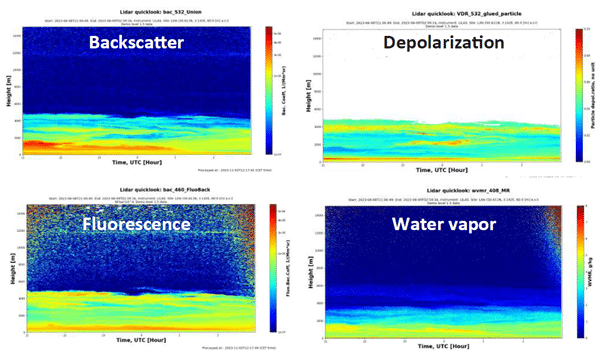
  • Up to 15 detection channels: to profile a wide range of atmospheric parameters, including aerosol backscatter, depolarization, fluorescence, water vapor, trace gases, and temperature.
  • Advanced laser technology: Uses diode or flash-lamp pumped Nd:YAG lasers with energy per pulse up to 200 mJ at 355 nm and repetition rate up to 200 Hz.
  • Depolarization capability: Measures linear depolarization ratios at multiple wavelengths to distinguish between spherical and non-spherical particles.
  • Fluorescence detection: Provides additional vertically resolved information to improve aerosol typing.
  • Customizable configurations: The modular design allows adaptation to initial and evolving research objectives.
  • Robust and transportable design: Facilitates installation, inside or outside with optional thermal enclosure.
  • Data Processing: Includes AUSTRAL software for real-time visualization and interpretation of measurement data.
  • Enhanced data quality: The CE710 meets all the requirements of the stringent ACTRIS Quality Assurance guidelines, that ensure high measurement precision and reliability and are a prerequisite for data certification by ACTRIS.
  • Comprehensive aerosol profiling: The multi-channel design allows detailed characterization of aerosol physical and chemical properties, providing valuable inputs for atmospheric models.
  • Integrated calibration tools: The built-in remote control and calibration functions enable operators to consistently perform standardized quality control operations over time.
  • Advanced analysis capabilities: The AUSTRAL software offers real-time data processing and visualization, enabling quick assessment of atmospheric conditions and facilitating advanced research and collaborative projects.
  • Future-Proof Design: The modular architecture supports future upgrades, allowing the system to adapt to evolving scientific requirements and technological advancements.

COBIACC campaign

COBIACC campaign

Is the rural atmosphere better than elsewhere?

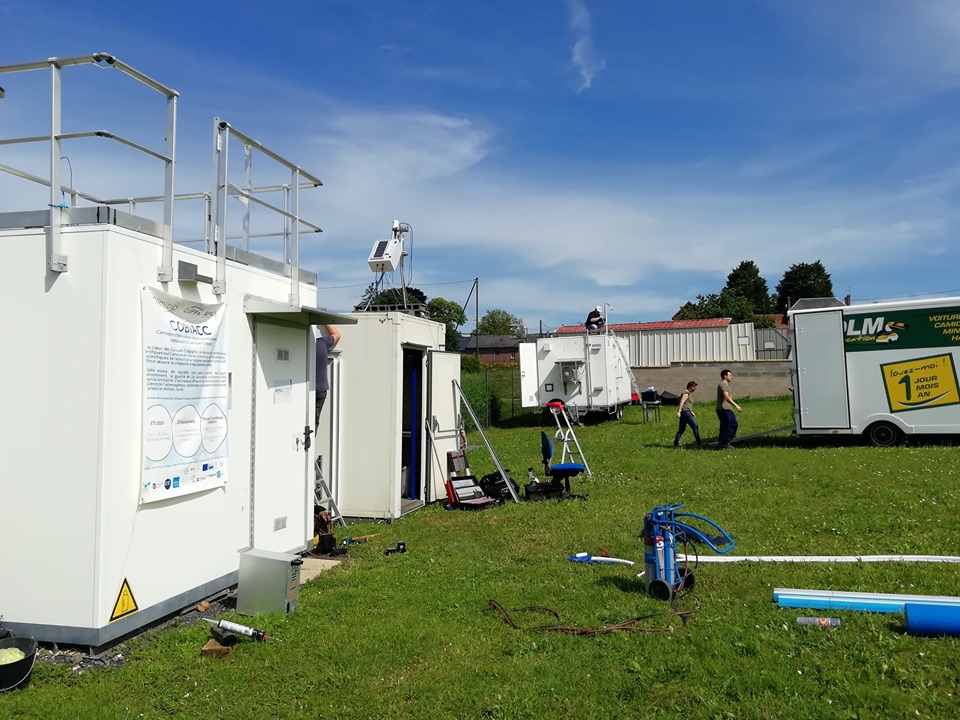
For the entire month of July in Caillouël-Crépigny (France), scientists from the University of Lille and ATMO Hauts-de-France will analyze particles in the air and their impact on health in rural areas.

Since 28 June, more than twenty air pollution measuring devices deployed over 100 m² in the commune of Caillouël-Crépigny (02) may answer this question.

Objectives: To understand the formation and the composition of particles and their precursors in the air in a rural environment during the summer period.

The sensors collect dust from the countryside and nearby dust from forests, roads, buildings and industries in the distance.

The facility consists of four containers installed on 100 m² in the village square of Caillouël-Crépigny. They accommodate twenty-two observation instruments including our Cimel Sun Sky Lunar CE318-T photometer as well as our CE376 micro-LiDAR. These instruments, unique in France, measure the impact of climate change on air quality, biodiversity and health. Thirty researchers take turns night and day to study the chemical modifications of particles during periods of high heat.

This campaign was named COBIACC for Campagne d’OBservation Intensive des Aérosols et précurseurs à Caillouël-Crépigny. It is the result of a partnership between Labex CaPPA, a laboratory of excellence in Lille, CPER Climibio, an environmental project involving 16 laboratories in the Hauts-de-France and Atmo Hauts-de-France, the regional air quality observatory.

Laboratories involved: