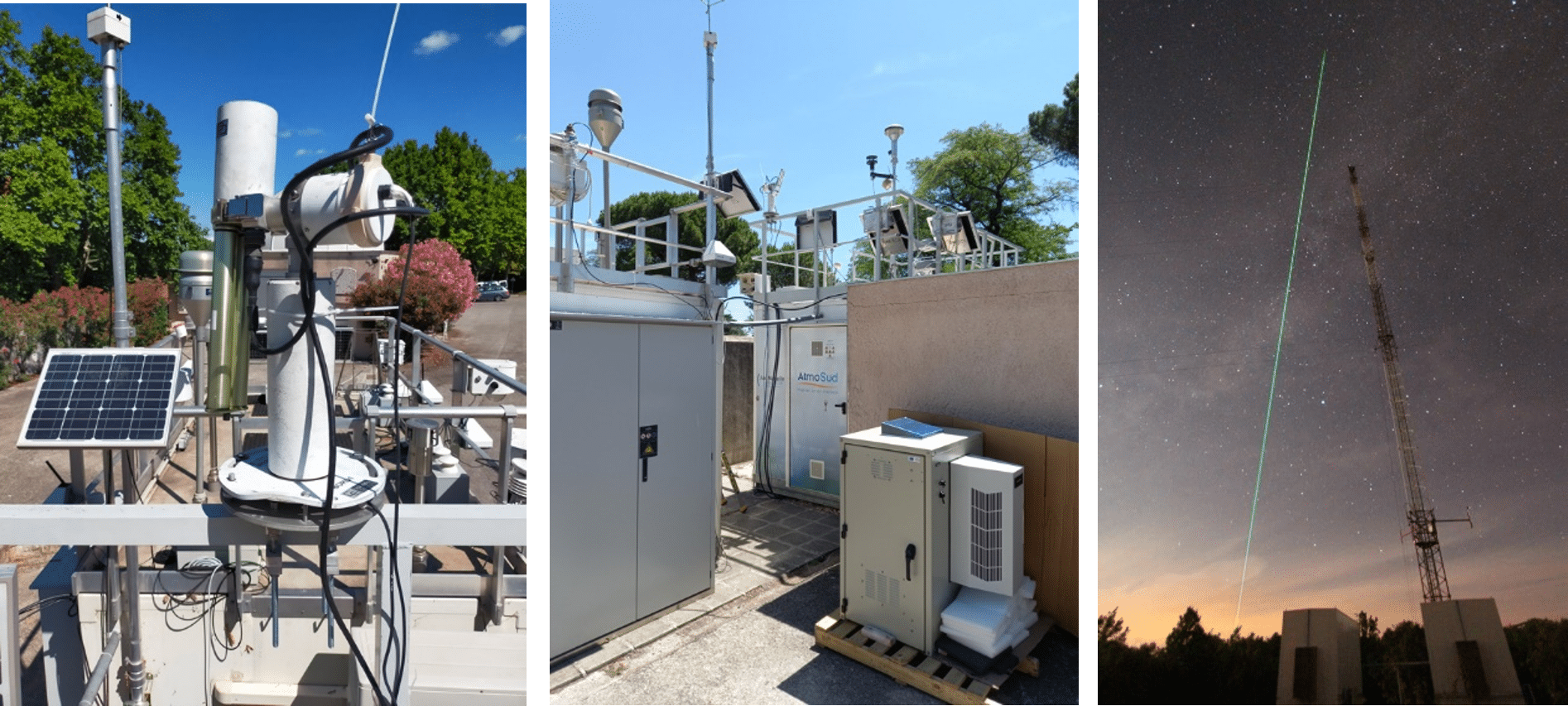
ATMOSUD super sites

Urban air quality monitoring at ATMOSUD super sites

CIMEL instruments supporting urban air quality and atmospheric process studies across ATMOSUD and OHP reference sites

ATMOSUD operates a network of long-term atmospheric reference sites in Southern France dedicated to air quality and greenhouse gas studies. These super sites combine in situ measurements, remote sensing observations and modelling tools to better understand pollutant dispersion, atmospheric mixing and emission reduction scenarios at the metropolitan scale.

Within this framework, CIMEL Automatic Aerosol Monitoring Solutions (AAMS) play a key role by providing continuous, high-quality observations of both the vertical and column-integrated structure of the atmosphere.

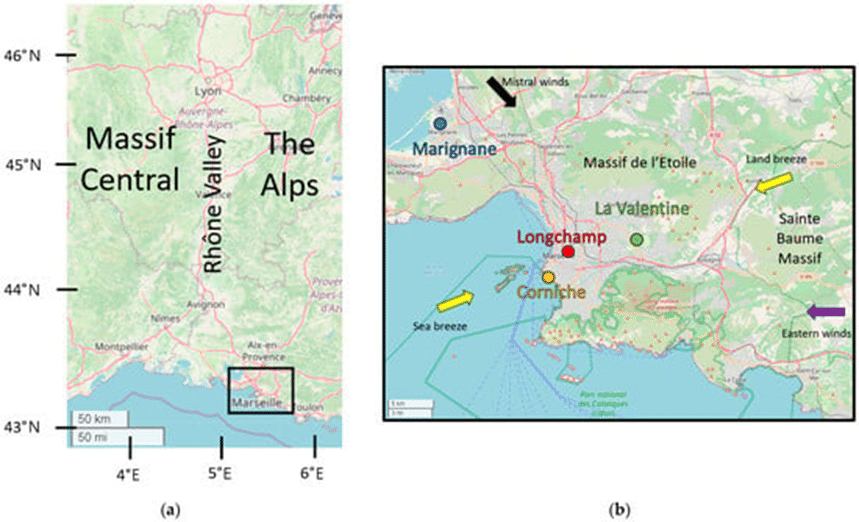
Figure 1. Map of the SUD–PACA region (left, (a)) and zoomed in on Marseille (right, (b)) showing the location of the measurement stations (blue: Marignane (AER), orange: Corniche (COR), red: Longchamp (LCP), green: La Valentine (LAV)). Arrows in yellow, black, and purple indicate the main wind regimes over the study periods, respectively, sea/land breezes (28%), mistral winds (21%), and eastern winds (17%).

Marseille–Longchamp: an urban reference site for air quality applications

The Marseille–Longchamp site, located in the city centre, is a flagship ATMOSUD urban reference observatory. It captures air quality conditions in a dense urban environment strongly influenced by local emissions, complex meteorology and coastal effects.

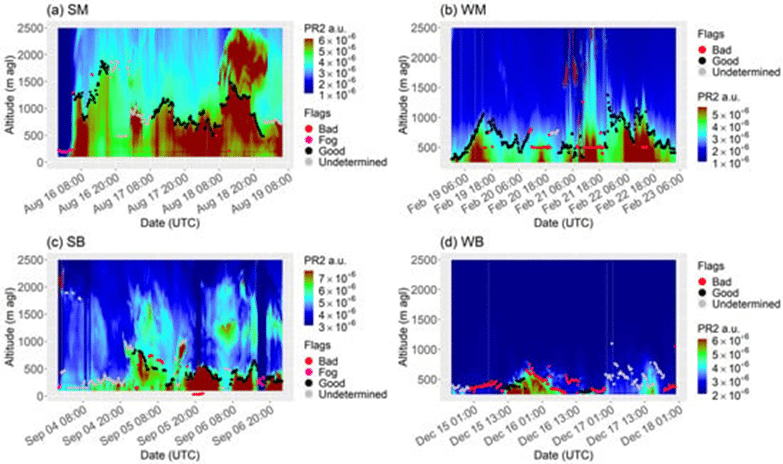
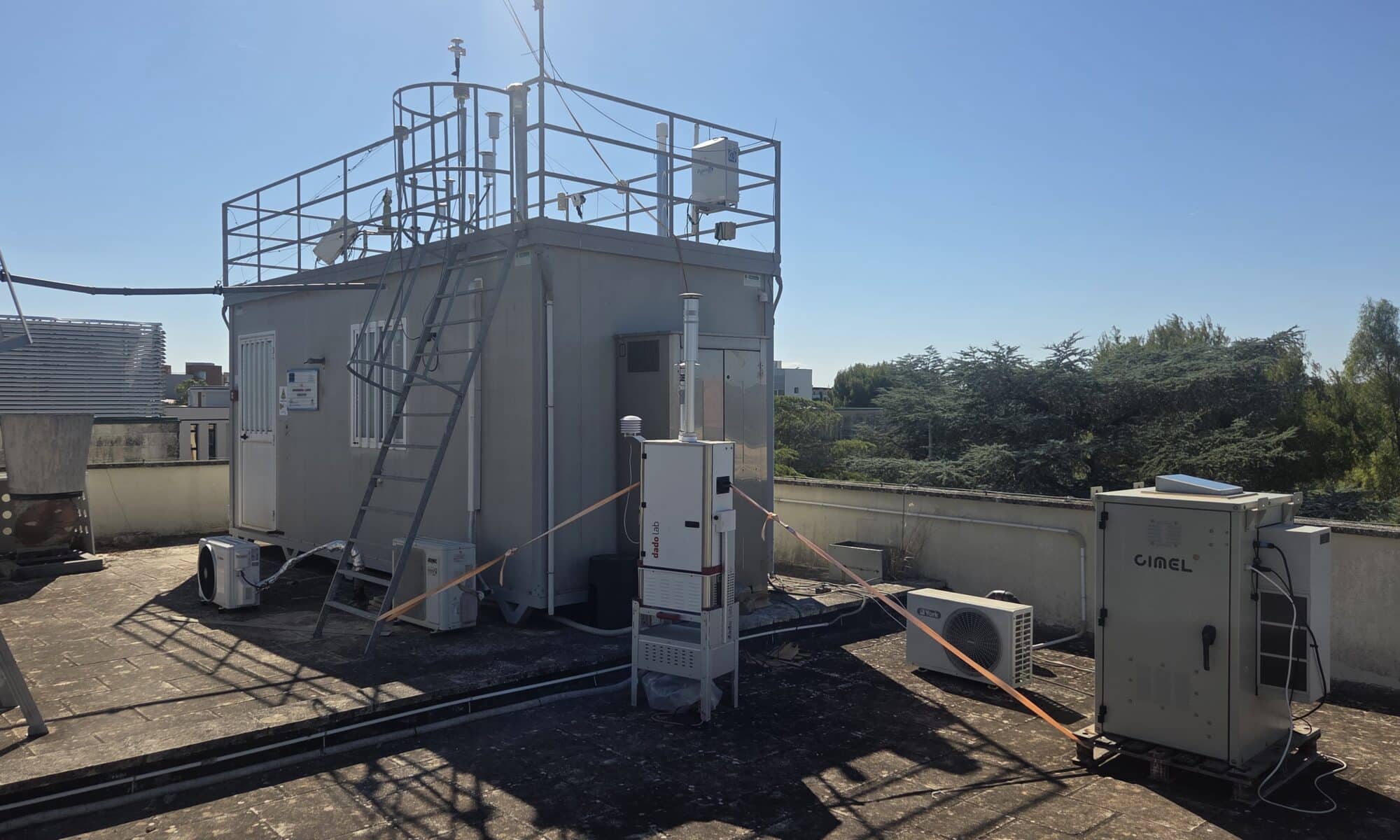
A CIMEL CE376 aerosol LiDAR is deployed on the rooftop of the site to continuously monitor atmospheric vertical structure, with a particular focus on atmospheric boundary layer height (ABLH). This parameter is a key driver of pollutant dilution and accumulation in cities. LiDAR observations reveal strong contrasts between wind regimes, such as mistral conditions inducing intense turbulence and deeper mixing layers, and sea–land breeze situations associated with shallow boundary layers and pollutant buildup. These LiDAR-derived mixing height observations provide essential physical context for the interpretation of in situ air quality measurements, strengthening the operational and scientific value of the Marseille–Longchamp site.

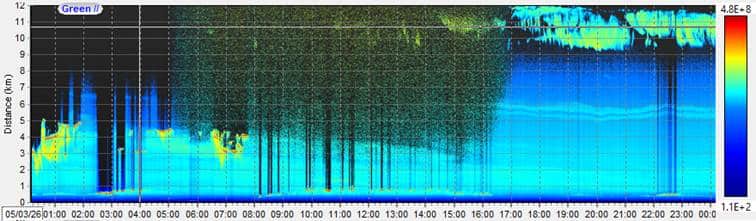
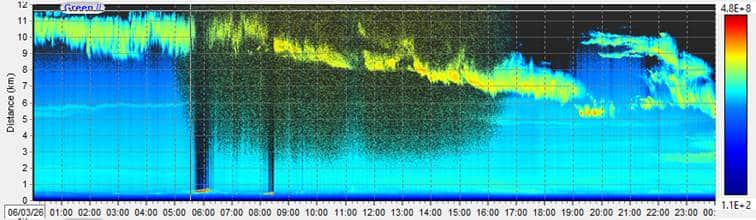
Figure 2. Time series of the green channel PR2 for the SM event (a), the WM event (b), the SB event (c), and the WB event (d). Color dots represent the ABLH (pink, black, red, and gray stand for fog, good, bad, and undetermined flags, respectively).

Complementing the LiDAR, a CIMEL CE318 sun photometer provides long-term measurements of aerosol optical properties, contributing to the characterization of the atmospheric column above the urban area.

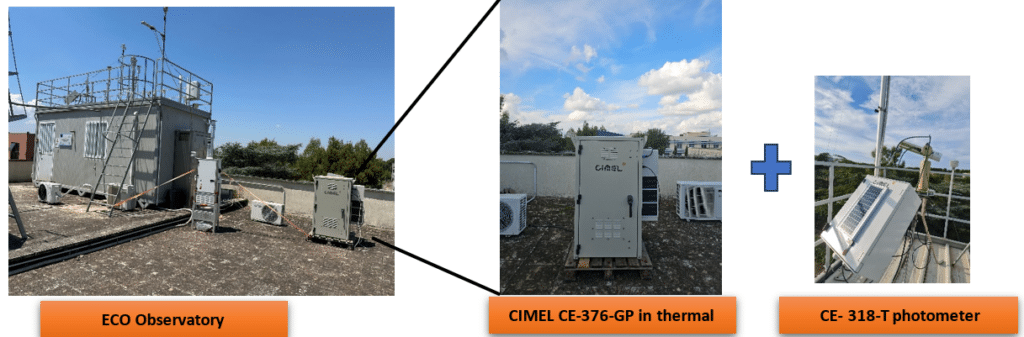
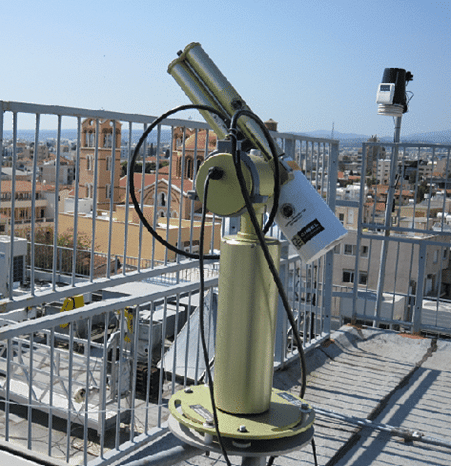
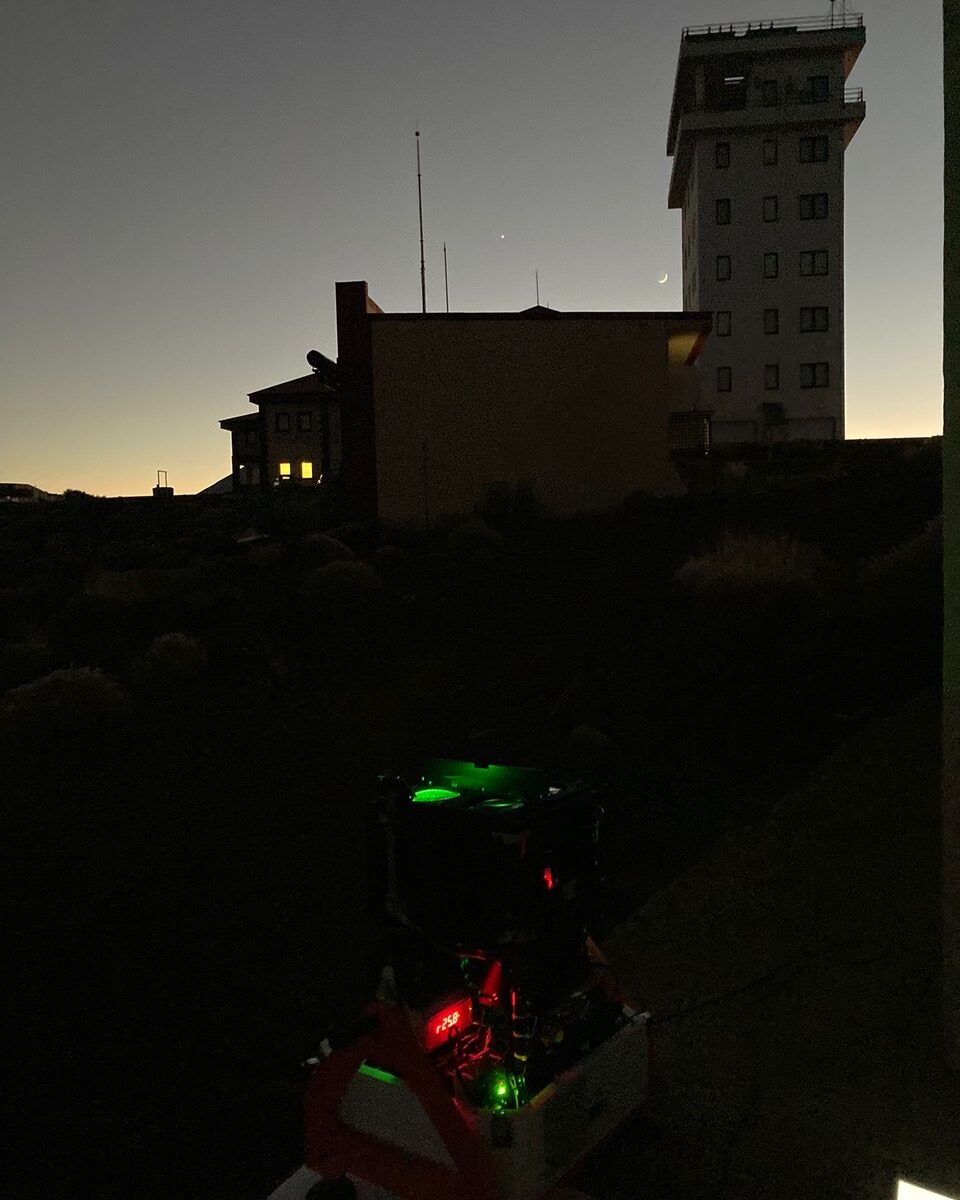
Figure 3 : Picture of the CE318-T photometer at Marseille–Longchamp site.

Complementary sites: urban, coastal and rural altitude observations

Beyond Marseille–Longchamp, ATMOSUD and its scientific partners operate complementary reference sites covering contrasted environments, including coastal and industrial areas and the Observatoire de Haute-Provence (OHP), a rural high-altitude site representative of background atmospheric conditions.

The OHP site plays a central role in regional atmospheric studies by documenting free-tropospheric conditions, long-range transport and baseline aerosol and gas concentrations. The scientific collaboration between ATMOSUD and OHP enables a consistent interpretation of observations across environments, from urban emission-dominated areas to rural background conditions.

Across this network, CIMEL instruments ensure observational continuity, allowing comparisons between sites and supporting studies of local versus regional contributions to air quality and greenhouse gas signals.

From observations to applications

Data collected at ATMOSUD and OHP super sites feed a wide range of applications, including:

  • interpretation of urban air quality measurements,
  • analysis of pollutant accumulation and dilution regimes,
  • support to atmospheric modelling,
  • evaluation of metropolitan-scale emission reduction scenarios.

By integrating CE376 LiDAR vertical profiling and CE318 photometer column observations within operational reference sites, CIMEL’s AAMS contributes directly to advancing air quality monitoring and atmospheric process understanding in complex urban and regional environments.

Bibliography

  • Xueref-Remy, I., Riandet, A., Bellon, C., Khaykin, S., Blanc, P.-E., Gomez, F., Armengaud, A., Gille, G., Popovici, I., Pascal, N., Podvin, T., and Goloub, P.: Continuous monitoring of atmospheric aerosols by LIDAR remote sensing technics in the south-east of France at the Observatoire de Haute Provence and Marseille Longchamp sites in the framework of ACTRIS-France and of the ANR COoL-AMmetropolis project., EGU General Assembly 2022, Vienna, Austria, 23–27 May 2022, EGU22-3126, https://doi.org/10.5194/egusphere-egu22-3126, 2022.
  • Riandet, A., Xueref-Remy, I., Popovici, I., Lelandais, L., Armengaud, A., & Goloub, P. (2023). Diurnal and Seasonal Variability of the Atmospheric Boundary-Layer Height in Marseille (France) for Mistral and Sea/Land Breeze Conditions. Remote Sensing, 15(5), 1185. https://doi.org/10.3390/rs15051185

CIMEL-GRASP alliance

CIMEL joins the GRASP Earth group, bridging space-to-ground atmospheric monitoring

Keywords: Alliance · GRASP Earth · NewSpace · Atmospheric monitoring · Polarimeters · Air quality · Climate · Earth observation

CIMEL and GRASP are joining forces within GRASP Earth to accelerate a new generation of atmospheric environmental monitoring, from space down to reference ground observations. By combining CIMEL’s expertise in high-precision scientific instrumentation with GRASP’s advanced retrieval and data processing capabilities, the alliance aims to deliver actionable information for climate research, meteorology, air quality and environmental decision-making.

Monitoring atmospheric composition, including aerosols, gases and clouds, is essential for public health and climate applications and it also supports key satellite surface imagery uses. Yet capturing a reliable picture of a complex and rapidly changing atmosphere requires multiple instrument types and a consistent processing approach, across scales ranging from local to global and from the surface to the upper atmosphere. GRASP Earth’s ambition is to bring together ground based accuracy, satellite coverage and powerful inversion algorithms into coherent measurement and processing chains that users can trust.

As part of the alliance, CIMEL will contribute its industrial know-how for spaceborne instrumentation while continuing its current operations and collaborations with partners and customers to build robust end-to-end data product chains.

Resources

CE312-T at La Crau (CNES)

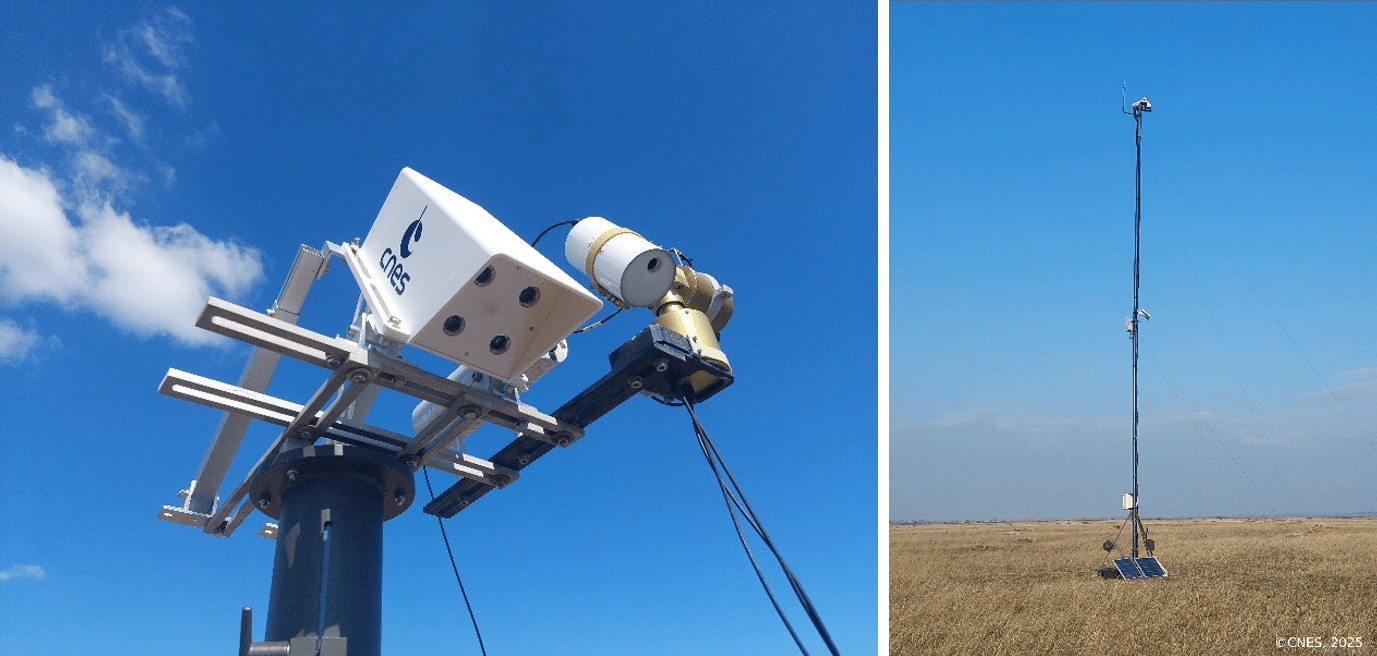
Installation of the robotized CE312 radiometer at the La Crau site for CNES

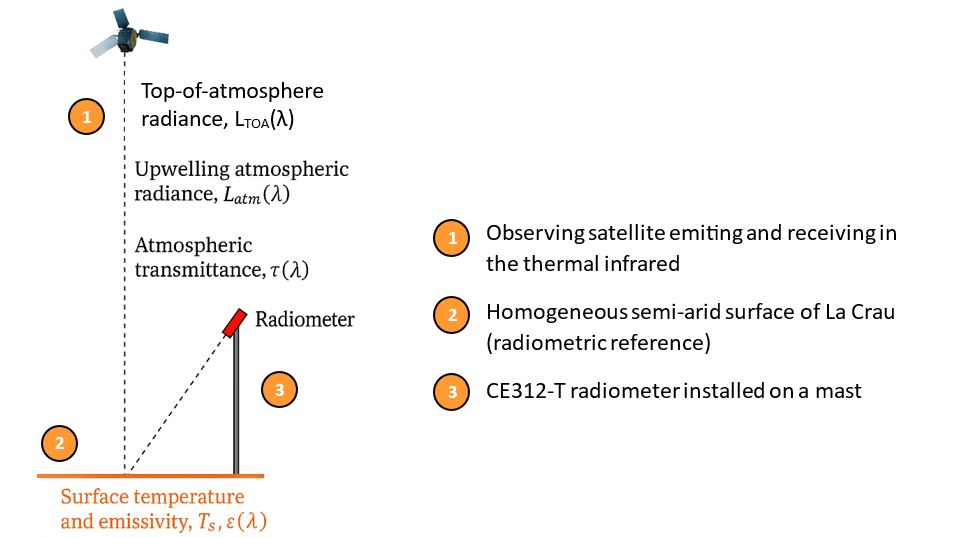
In June 2023, the new robotized version of the CE312 thermal infrared radiometer was installed on a dedicated mast at the La Crau reference site, one of CNES’s strategic Calibration and Validation (CAL/VAL) locations for current and next-generation thermal satellite missions. This installation marks a significant reinforcement of France’s long-term capability to generate the high-quality ground truth data required to validate Land Surface Temperature (LST) and surface emissivity products with scientific rigor.

The CE312 provides high radiometric accuracy, excellent thermal stability and a fine angular sampling capability that directly supports advanced thermal remote sensing applications. Its multispectral thermal channels and differential measurement principle deliver traceable radiances and brightness temperatures, forming the quantitative foundation for stringent LST product validation. The robotized head adds an essential dimension: automated multi-angle observations. These directional measurements are critical for Temperature–Emissivity Separation (TES) techniques, characterization of surface anisotropy, and the reduction of emissivity-related uncertainties that remain a long-standing challenge in comparing in situ measurements with satellite-derived LST.

Inspired by established ground-based networks such as AERONET for aerosol optical properties and RadCalNet for surface reflectance and BRDF reference measurements, the CE312 installation extends this philosophy to the thermal domain, enabling consistent, traceable multi-angle observations of ground surfaces for enhanced satellite CAL/VAL.

Integrated into CNES’s CAL/VAL strategy, the CE312 now contributes to cross-sensor thermal product intercomparisons, supports the preparation of new missions such as TRISHNA, and provides datasets used in agriculture, hydrology and land–atmosphere energy flux modeling.

La Crau is part of the international TIRCalNet initiative, which aims to establish a harmonized network of ground reference sites for thermal infrared calibration and validation. Within this network, La Crau provides:

  • Well-characterized surface temperature and emissivity measurements for generating reference top-of-atmosphere (TOA) signals.
  • Traceable, stable datasets that help verify and cross-calibrate satellite radiometers.
  • Multi-angle, in situ observations used to reduce LST and emissivity uncertainties and to improve algorithm robustness across missions.

TIRCalNet targets TOA brightness temperature uncertainties on the order of 0.5 K, and the CE312’s radiometric performance and robotic acquisition geometry at La Crau directly support this objective.

Since mid-2023, the CE312 has operated continuously, enhancing the long-term radiometric archive of La Crau, a semi-arid area well known for its stability and suitability for thermal infrared validation. Its directional and multispectral measurements underpin more reliable satellite LST retrievals and strengthen continuity across current and future thermal missions.

CE376 LiDAR at Izaña (AEMET)

The CE376 LiDAR at Izaña (AEMET)

High above the clouds in the Canary Islands, scientists at the Izaña Observatory (AEMET) are using the CE376 LiDAR to explore the vertical structure of the atmosphere with unprecedented detail. This advanced instrument allows the aerosol science team to monitor aerosols moving across the Atlantic Ocean, providing critical insights into climate, air quality, and weather processes.

The CE376 is a compact dual-wavelength depolarization elastic lidar (532 and 808 nm). Its continuous monitoring capability makes it particularly valuable for atmospheric research. By analyzing data from both channels, the instrument provides detailed information on aerosol properties, allowing our team to capture the vertical distribution and dynamics of aerosols with unmatched precision.

Every day, the CE376 monitors Saharan dust events as they sweep across the Atlantic, revealing how mineral particles interact with clouds and affect radiation. Over time, it has also recorded comprehensive data on various aerosol types, including volcanic sulfate aerosols from the Cumbre Vieja eruption in September 2021, the devastating wildfire event on the island in August 2023, as well as long-range transported, aged wildfire plumes originating from Canadian wildfires during the late spring seasons. These observations have highlighted clear differences in particle size, shape, and optical properties, demonstrating the CE376’s suitability for continuous monitoring and characterization of both the temporal and vertical evolution of atmospheric aerosols.

Fig 1. MODIS VIS channel satellite image showing the Saharan dust over the Canary Islands on 20 August 2020.

Looking ahead, our team is continuously advancing the integration of CE376 lidar data together with sun photometer and in-situ measurements, while appliying sophisticated retrieval techniques such as GRASP (Generalized Retrieval of Aerosol and Surface Properties). This ongoing collaborative synergy is contributing to a more comprehensive understanding of aerosol optical properties and their effects on radiative forcing and regional climate.

More than just an instrument, the CE376 serves as a window into the atmosphere, revealing processes invisible to the naked eye but essential for science, society, and our understanding of a changing climate.

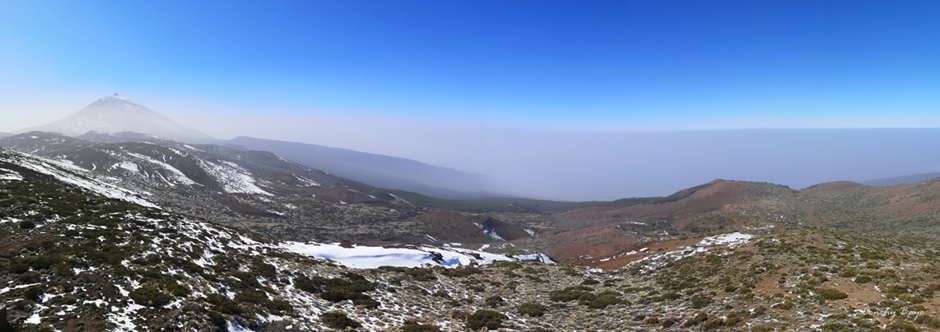
Fig 2. Saharan Air layer reaching the Izaña Observatory (AEMET). Courtesy of Conchy Bayo (AEMET)
Fig3. CE376 Lidar at Izaña Observatory (AEMET)

NOAA-NASA MD campaign

NASA and NOAA pioneered a shipborne photometer campaign across the Atlantic

In 2023, NASA and NOAA launched a groundbreaking Atlantic campaign, placing an automated, AERONET-compatible sun photometer aboard a research vessel for the first time. The goal was simple but ambitious: collect high-quality aerosol optical depth (AOD) data over ocean regions, long neglected by traditional land-based monitoring networks. By measuring directly from the sea, scientists could fill a critical observational gap and strengthen satellite validation where fixed stations are sparse.

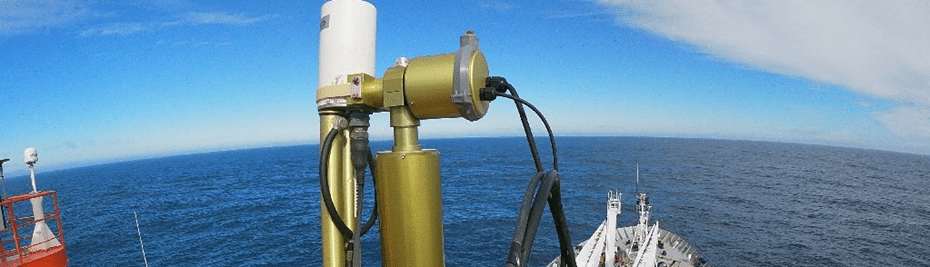
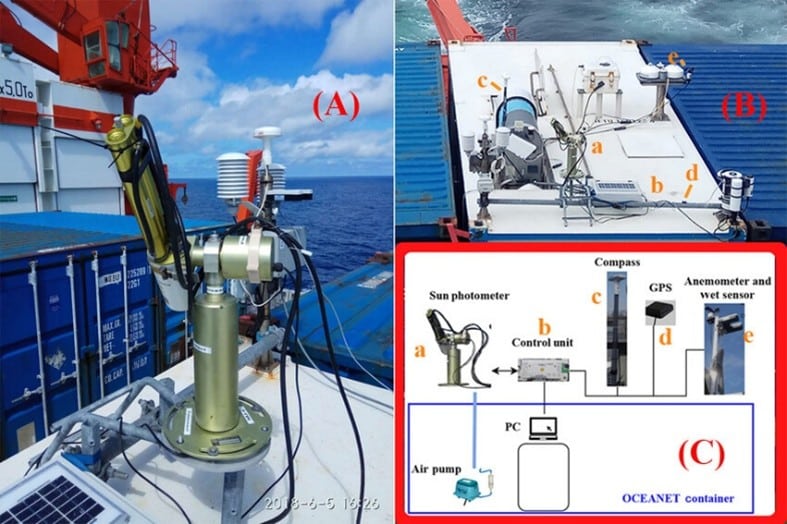
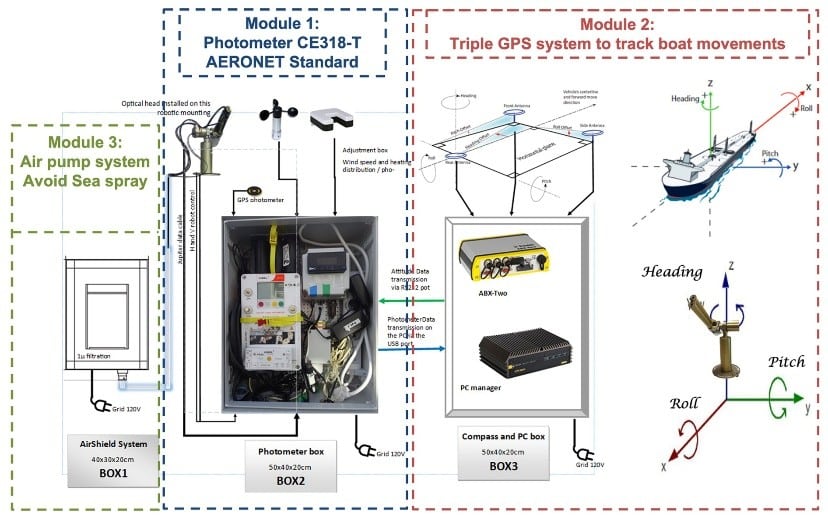
The instrument, a CIMEL CE318‑T, was specially adapted for shipborne deployment. Engineers stabilized it against vessel motion, added protective enclosures to withstand sea spray, and updated the firmware to maintain accurate sun-tracking and sky radiance measurements. Calibrations were aligned with AERONET protocols, ensuring the data matched the rigorous standards of land-based sites.

Adapted CIMEL CE 318‑T photometer installed on the vessel, stabilized against motion and protected from spray

Voyage across the Atlantic

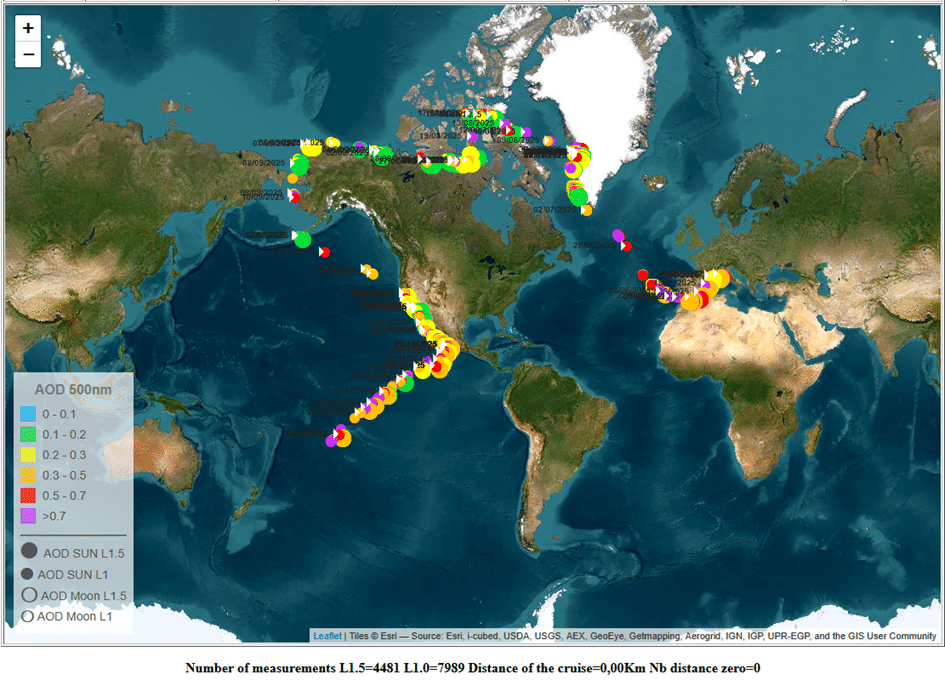
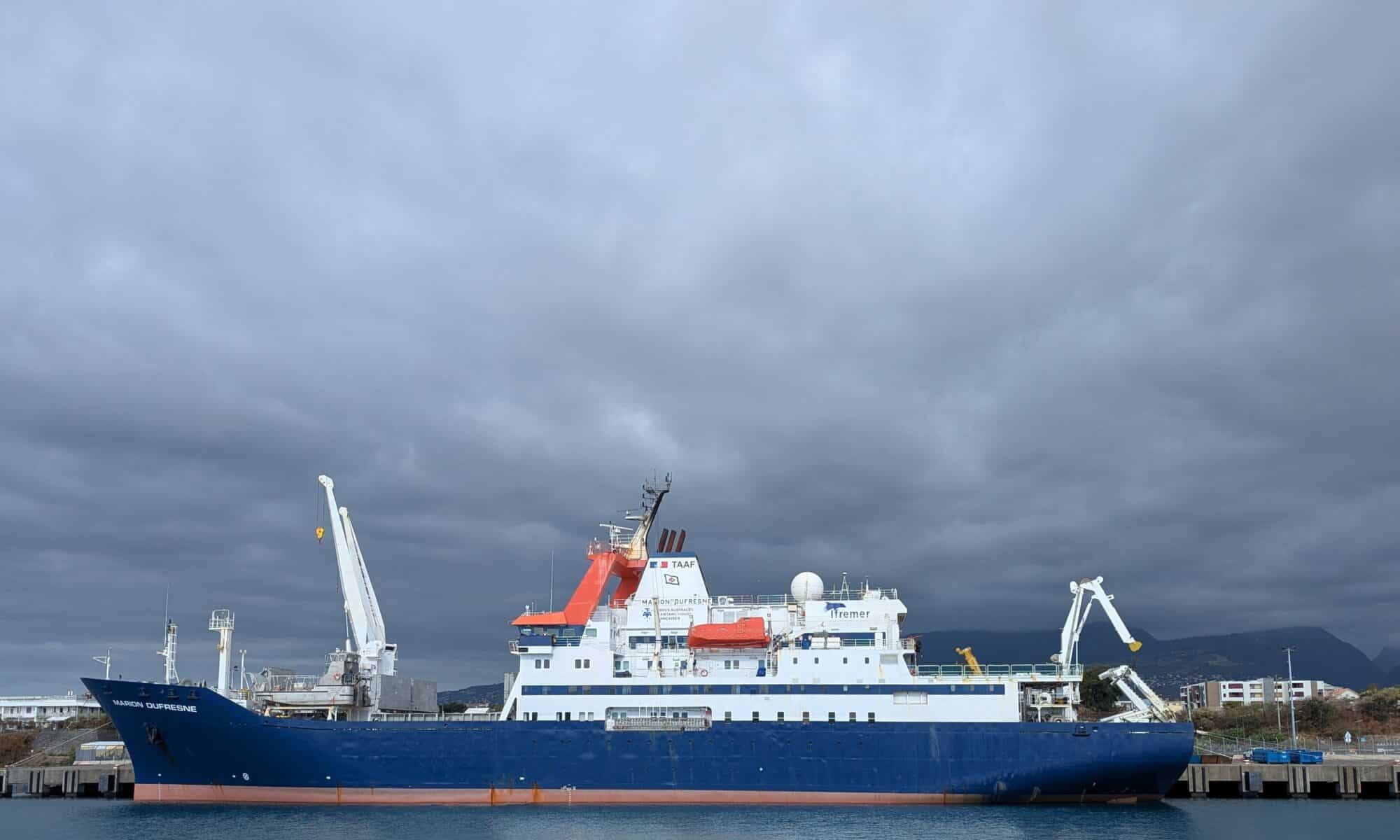
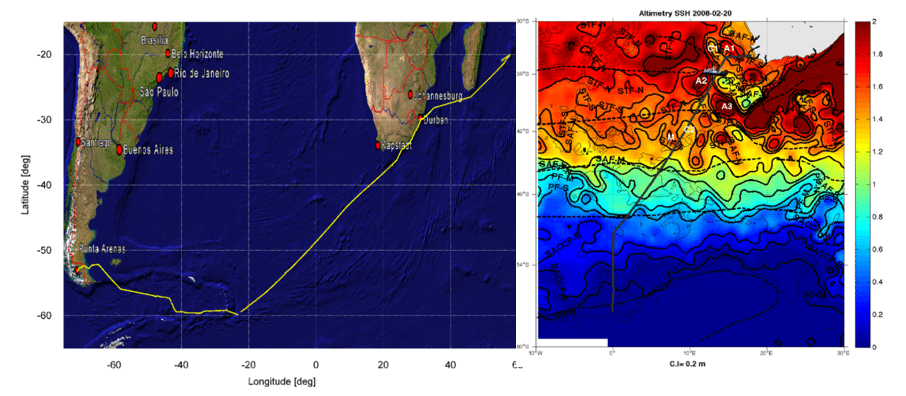
Aboard the RV Marion Dufresne, the photometer captured aerosol characteristics along a route stretching from the tropical Atlantic, across the Intertropical Convergence Zone (ITCZ), and into the mid-latitudes. The ship crossed the ITCZ three times, recording interactions between Saharan dust, marine aerosols, and cloud systems. Over the three-year period, the dataset revealed patterns of episodic dust transport, background sea-spray, and long-range aerosol variability.

The campaign was conducted in close collaboration with the LOA through the AGORA-Lab, which ensured data quality control, calibration traceability, and scientific analysis in coordination with NASA’s AERONET team.

RV Marion Dufresne cruise track across the Atlantic, showing key aerosol sampling regions.

Key insights include:

  • Shipborne AOD retrievals were on par with established AERONET sites, confirming data quality.
  • The measurements provide essential reference points for satellite sensors like PACE and support improved aerosol transport modeling.

Bridging the gap in ocean observations

Oceanic aerosol measurements are scarce but essential for accurate climate modeling and satellite validation. By deploying high-precision, automated photometers on ships, NASA and NOAA created a bridge between sparse ground stations and satellite footprints. This approach allows for continuous monitoring, capturing both episodic events like dust storms and consistent background conditions.

The campaign also sets a template for future maritime aerosol monitoring. Plans include deploying similar instruments on additional vessels, extending geographic coverage, and integrating vertical profiling systems or unmanned aerial platforms. Data are archived in standardized formats and made publicly available, ensuring the scientific community can leverage the measurements for satellite match-ups, climate model validation, and process studies.

By venturing directly into the Atlantic, NASA and NOAA have opened a new chapter in aerosol observation. This initiative not only fills a critical gap in global monitoring but also enhances our understanding of aerosol-cloud-climate interactions in remote ocean regions.

References

  1. Torres, B. et al. 2025. Adaptation of the CIMEL‑318T to shipborne use: 3 years of automated AERONET-compatible aerosol measurements on board the research vessel Marion Dufresne. Atmos. Meas. Tech., 18, 4809‑4838. DOI:10.5194/amt‑18‑4809‑2025.
  2. Torres, B. 2024. Three years of aerosol measurements using an automated photometer on the first long-term AERONET ship site. LOA/Apolo Univ. Lille.
  3. AERONET / Maritime Aerosol Network (MAN) website.
  4. PACE Technical Report Series Vol 11. 2023. PACE Science Data Product Validation Plan. NASA.

New CE710 Raman LiDAR

Pioneering Aerosol Remote Sensing: LOA and CIMEL’s Journey with the CE710 LiDAR for ACTRIS

Keywords: LiDAR, Aerosols, monitoring, remote sensing, ACTRIS, Raman.

The Laboratoire d’Optique Atmosphérique (LOA) at the University of Lille, in collaboration with CIMEL, focuses on studying clouds, aerosols, gases, and their interactions with radiation, utilizing advanced remote sensing instrumentation for experiments, observations, and modeling. LOA brings its expertise to ACTRIS as the Quality Assurance and Control Lead, playing a crucial role in maintaining precise and reliable photometric aerosol measurements.

Since 1991, LOA and CIMEL have collaborated to advance and refine photometry techniques for measuring aerosols and water vapor. This collaboration was at the origin of the NASA AERONET planetary network, built with the CIMEL sun/sky/lunar photometers for over three decades. In 2005, building on this success, they extended their cooperation to include aerosol LiDAR technologies. Finally, in 2020, LOA and CIMEL established a joint research laboratory, AGORA-Lab, to develop advanced remote sensing technologies, including Lidars and photometers, and to combine them for cutting-edge performance.

LiDARs provide high-resolution vertical profiles of aerosols and clouds, while photometers offer column-integrated aerosol optical properties. By combining these measurements, calibration, quality control and retrievals are enhanced, leading to better quantification and characterization of aerosols and higher-level data products.

Since 2012, CIMEL and LOA have collaborated on developing the CE710 LiDAR, a high-power, multi-spectral Mie-Raman-Fluorescence LiDAR, spearheading significant advancements in aerosol measurement capabilities. The first version, called LILAS, was set up on the ATOLL platform (Atmospheric Observatory of Lille) and has been part of ACTRIS since 2015.

LOA and CIMEL continuously advance the industrialization and validation of the CE710 LiDAR range, making it a cost-efficient, modular solution that is ACTRIS-ready, meaning it meets all current and future guidelines. This cutting-edge technology provides innovative features that enhance measurement accuracy, operational efficiency, and adaptability to evolving scientific needs.

  • Multi-wavelength emission: 355, 532 and 1064 nm.
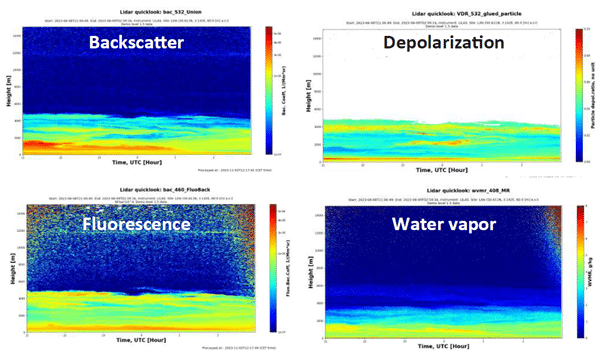
  • Up to 15 detection channels: to profile a wide range of atmospheric parameters, including aerosol backscatter, depolarization, fluorescence, water vapor, trace gases, and temperature.
  • Advanced laser technology: Uses diode or flash-lamp pumped Nd:YAG lasers with energy per pulse up to 200 mJ at 355 nm and repetition rate up to 200 Hz.
  • Depolarization capability: Measures linear depolarization ratios at multiple wavelengths to distinguish between spherical and non-spherical particles.
  • Fluorescence detection: Provides additional vertically resolved information to improve aerosol typing.
  • Customizable configurations: The modular design allows adaptation to initial and evolving research objectives.
  • Robust and transportable design: Facilitates installation, inside or outside with optional thermal enclosure.
  • Data Processing: Includes AUSTRAL software for real-time visualization and interpretation of measurement data.
  • Enhanced data quality: The CE710 meets all the requirements of the stringent ACTRIS Quality Assurance guidelines, that ensure high measurement precision and reliability and are a prerequisite for data certification by ACTRIS.
  • Comprehensive aerosol profiling: The multi-channel design allows detailed characterization of aerosol physical and chemical properties, providing valuable inputs for atmospheric models.
  • Integrated calibration tools: The built-in remote control and calibration functions enable operators to consistently perform standardized quality control operations over time.
  • Advanced analysis capabilities: The AUSTRAL software offers real-time data processing and visualization, enabling quick assessment of atmospheric conditions and facilitating advanced research and collaborative projects.
  • Future-Proof Design: The modular architecture supports future upgrades, allowing the system to adapt to evolving scientific requirements and technological advancements.

AAMS Cyprus Institute

The Climate and Atmosphere Research Center (CARE-C) of The Cyprus Institute using AAMS solution for atmospheric observation.

Keywords : Aerosols, Monitoring, Earth observation, Remote sensing, Wavelength, LiDAR, Photometer, AAMS, CARE-C.

The Cyprus Institute is non-profit research and educational institution with a strong scientific and technological orientation.

The Institute is divided into four research centers:

  • Energy, Environment and Water Research Center (EEWRC)
  • Science and Technology in Archeology and Culture Research Center (STARC)
  • Computation-based Science and Technology Research Center (caSToRC)
  • Climate & Atmosphere Research Center (CARE-C)

The Climate and Atmosphere Research Center (CARE-C) was founded at the Cyprus Institute in January 2020. It is a regional European Center of Excellence for Climate and Atmosphere Research, based in Cyprus, for the Eastern Mediterranean and Middle East (EMME) region. The aim of the center is to lead some researches about urgent climate change and air pollution challenges such as greenhouse gases, the water cycle, extreme weather, atmospheric dust and their impacts.

Therefore, the center owns a remote sensing group composed by a network of ground-based instruments located at three Cyprus Atmosphere Observatory (CAO) stations: Nicosia, Agia Marina Xyliatou and Troodos. Among these instruments, three CE318-T – Sun Sky Lunar Multispectral Photometers and a CE376 – Compact LiDAR.

CIMEL AAMS – Automatic Aerosol Monitoring Solution allows the study of the transportation of pollution, dust, smoke and all the aerosols related to atmospheric composition. For instance, optical characterization of dust and smoke particles are made thanks to the 2 wavelengths CE376 – Compact LiDAR. In addition, the instrument has depolarization capability, which is a relevant information for aerosols typing.

By using state-of-the-art solutions and collaborating with the Laboratoire d’Optique Atmosphérique (LOA – University of Lille/CNRS), the CAO provides high quality, long-term observations of key atmospheric pollutants relevant to air quality and climate change, and thus, brings value to the Cyprus Institute in different sectors such as Research, Innovation and Education. This collaboration is developing for many years in the frame of aerosol monitoring (AERONET), radiative flux monitoring and more recently with automatic Lidar/photometer synergy, in the frame of ACTRIS. Moreover, the cooperation between LOA and CAO, in the frame of AQABA campaign, allowed the first operation of the prototype shipborne version of CE318T.

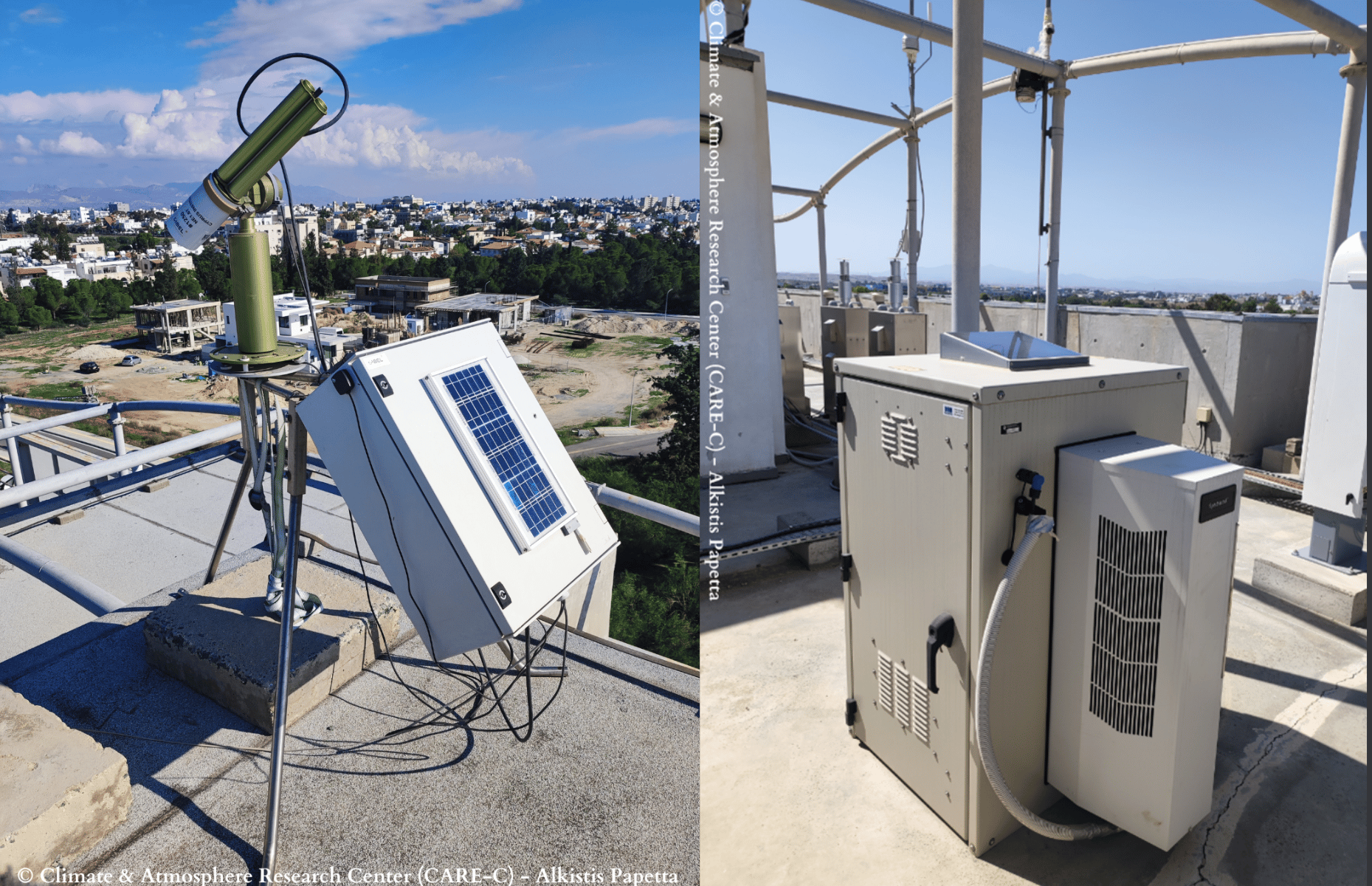
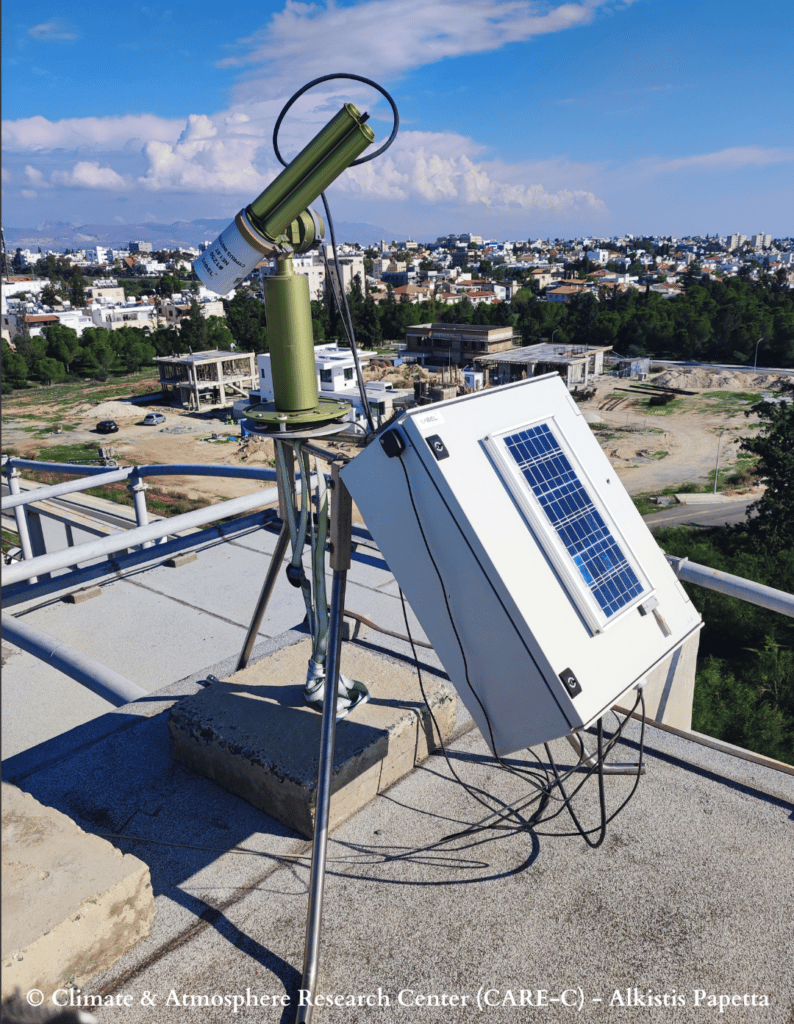
Figure 1 : CE318-T – Sun Sky Lunar Multispectral photometer at Nicosia station.

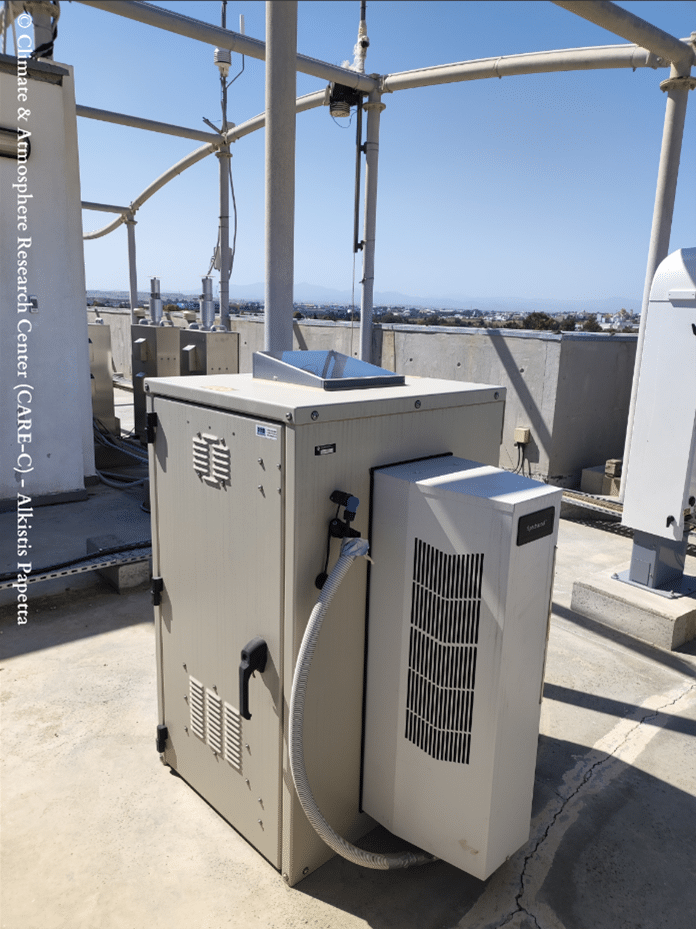
Figure 2 : CE376 – Micro LiDAR at Nicosia station.
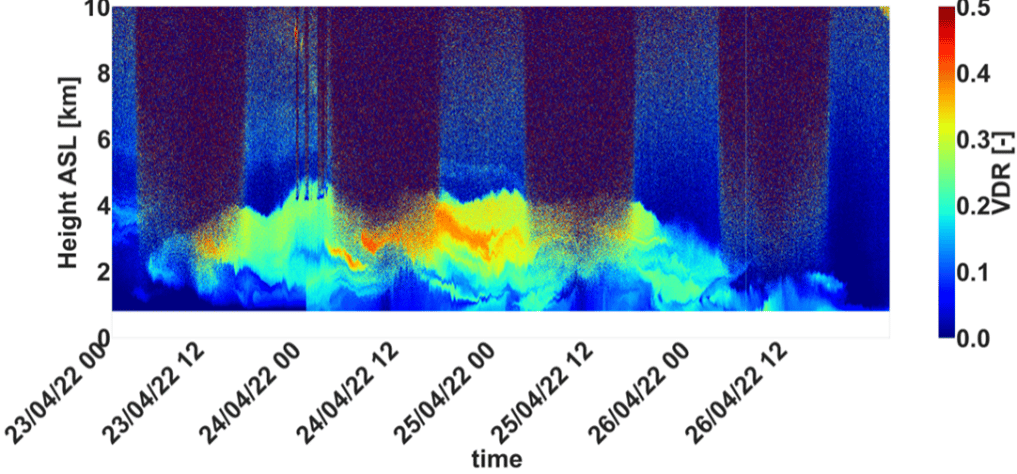
Figure 3 : Quicklook of the volume depolarization ratio during a dust event in Cyprus.

SORBETTO Winter School

SOlar Radiation Based Established Techniques for aTmospheric Observations (SORBETTO) Winter school.

Keywords : Aerosols, Monitoring, Earth observation, Remote sensing, Wavelength, LiDAR, Photometer, Radiation, Atmosphere, CAL/VAL, SORBETTO.

February 14th 2023

SOlar Radiation Based Established Techniques for aTmospheric Observations (SORBETTO) Winter school took place from February 6th to 10th at ESA-ESRIN (European Space Research Institute), in Frascati, Italy and was organized in collaboration with Sapienza University (Roma) and CNR-ISAC (National Research Council – Institute of Atmospheric Sciences and Climate).

SORBETTO is an important training event for young researchers collaborating within the international aerosol’s scientific community (gas and aerosol observations for climatological, meteorological, local and global air pollution studies, remote sensing and in-situ measurements, calibration of satellite measurements…).

Ground-based instruments deployed in Networks such as AERONET are key players to perform high quality observations that contribute to the Validation and Calibration (CAL/VAL) of satellite missions. Instruments such as Sun Sky Lunar Photometers or LiDARs allow to check that information derived from satellite sensors is comparable to ground measurements and thus, to validate their accuracy.


CIMEL Team operating an instrumental demonstration of CE318-T Sun Sky Lunar Photometer at University of Sapienza, 9th 2023.

The instrument show held on Thursday 9th at Sapienza University was the opportunity for students to attend a presentation of various solutions such as CIMEL CE318-T Sun Sky Lunar Photometer, exclusive instrument of NASA Aerosol Network AERONET.

It was a pleasure for CIMEL to attend the event with our great and exclusive Italian Business Partner XEarPro Srl. With 20 years of experience in the field of environmental monitoring, XEarpro Srl contributes in the development of applications and solutions to safeguard the environment around us. We collaborate closely to meet the needs of the Italian scientific community in term of aerosols remote sensing instruments. 

LiDAR LILAS

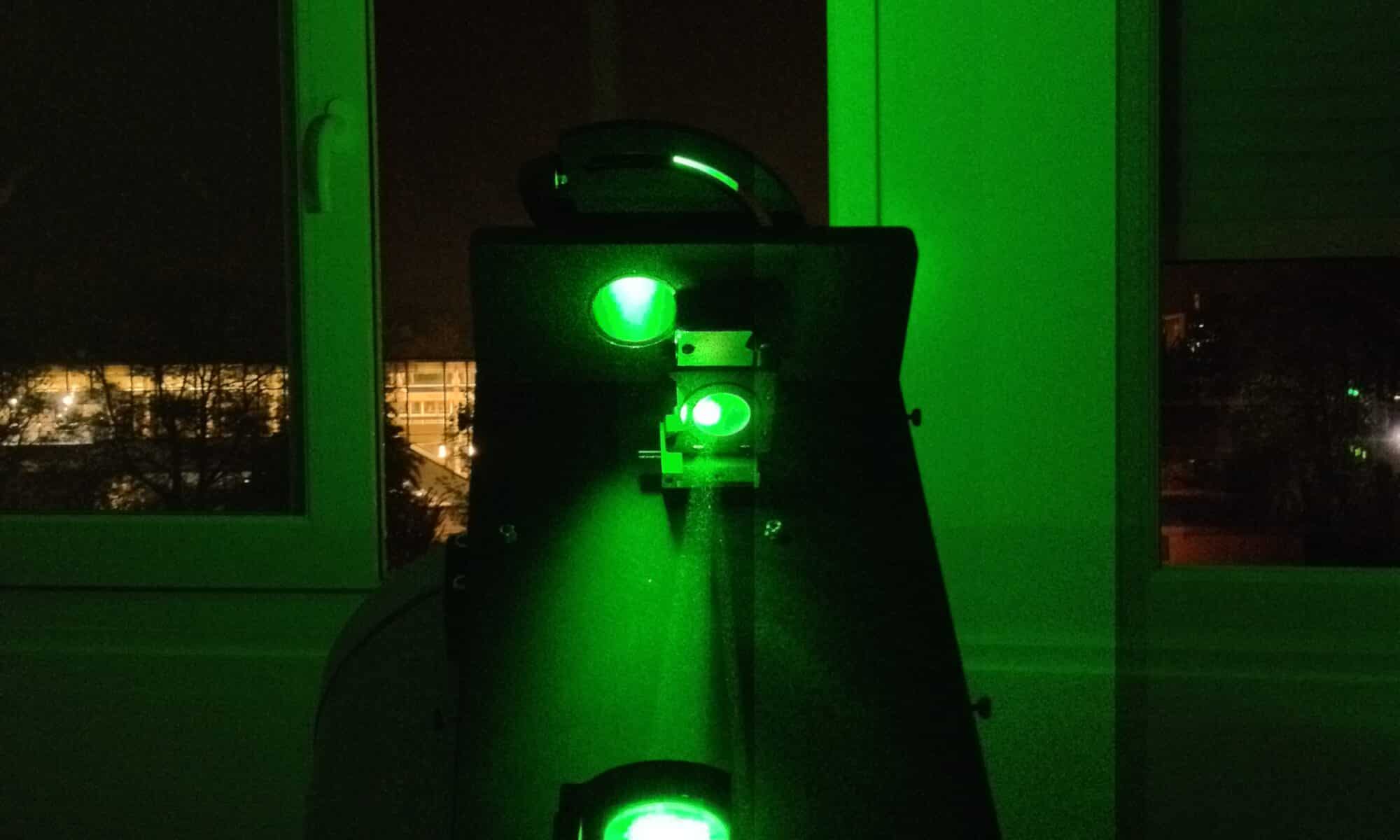
Multi-wavelength LILAS LiDAR Raman at the Laboratory of Atmospheric Optic (LOA).

Keywords : Aerosols, LiDARs, MicroLiDARs, monitoring, Earth observation, remote sensing, Raman, wavelengths, ash, dust, sand.

July 29th 2022

The Laboratoire d’optique atmosphérique (LOA) is a joint research unit of the National Center for Scientific Research (CNRS) of France and the University of Lille – Sciences and Technologies. The LOA studies the different components of the atmosphere, mainly clouds, aerosols and gas. In collaboration with the LOA, CIMEL created a joint research laboratory : AGORA-LAB.

Since 2005, the LOA has started the systematic observation of aerosols by LiDAR and has developed a database and an automated real-time data processing system. Its collaboration with CIMEL allowed the creation of the multi-wavelength LILAS LiDAR which was integrated into the European network EARLINET/ACTRIS in 2015.

The LILAS LiDAR was specifically designed and adjusted by CIMEL to meet a specific need of the LOA. The transportable multi-wavelength Raman research LiDAR LILAS offers a significant qualitative and quantitative value on aerosol parameters measured at night and during the day, in particular through its combination with CIMEL sun/sky/lunar photometers.

LILAS also allows the observation of clouds and the obtention water vapor and methane profiles. It also gives access to essential climate variables such as the absorption profile of atmospheric aerosols. Its maximum range can reach 20 km and allows it to study the lower stratosphere which can be useful in case of major volcanic eruption for example.

For the Data treatment, the AUSTRAL (AUtomated Server for the TReatment of Atmospheric Lidars) web server data is the processing tool, which provides real-time quicklooks of the LiDAR Range Corrected Signals (RCS) and Volume Depolarization Ratio (VDR) as well as Klett inversion results (extinction and backscatter coefficient profiles).

To answer the need of various stakeholders, the CE710 LiDAR is a fully customizable high power multi-channel aerosols LiDAR resulting from the collaboration between the LOA, CIMEL and Dr. Igor Veselovskii institute. Depending on the requirements and budgets of each, it exists multiple options to customize the LiDAR. For exemple, the choice of the laser type and the wavelengths, the depolarization options or the Raman options (and many more).

Thanks to its precision in the detection of aerosols, the LILAS CE710 LiDAR has highlighted many atmospheric natural events such as volcanic eruptions (ash) or dust and sand events for example but also biomass burning particles coming from fires. LILAS data and all the LiDAR’s activities between the LOA and CIMEL bring a precious monitoring tool to understand atmospheric phenomenas over France, Europe and worldwide.


Figure 1 : View of LILAS (telescope, laser, and acquisition bay) in vertical view, open roof hatch and example of observed aerosol profiles. LILAS is a transportable multi-wavelength Elastic & Raman LiDAR. It has 3 elastic channels (355, 532 and 1064 nm), 3 Raman channels (387, 407 and 530 nm) and 3 depolarized channels (355, 532 and 1064 nm).

Figure 2: Night time LILAS operation during SHADOW-2 campaign in Senegal (Credits: Q. Hu, LOA)

Figure 3 : Detection of smoke particles injected up to 17 km into the stratosphere by intense pyro-convection generated by the Canadian wildfires of summer 2017 (Hu et al., 2018).

Figure 4: Illustration of the extreme event in October 2017. LiDAR LILAS time series from 16/10/17-16:00 to 17/10/17-06:00 UTC at the Lille site (LOA). (a) The reddest regions indicate a high concentration of particles while the blue regions indicate a very low concentration of particles. (b) Aerosol depolarization which informs us about the shape of the particles and thus their nature, desert or fire particles.
 Graphic credits Q. Hu, LOA

Figure 5: LiDAR LILAS LOA
Communications and posters
  • Podvin T., P. Goloub, D. Tanré, I. Veselovskii, V. Bovchaliuk, M. Korensky, A. Mortier, S. Victori, .LILAS, un LIDAR multispectral et Raman pour l’étude des aérosols, de la vapeur d’eau et des nuages, Atelier Experimentation et Instrumentation 2014 (oral presentation)
  • Podvin T, Q. Hu, P. Goloub,  O. Dubovik, I. Veselovskii, V. Bovchaliuk, A. Lopatin, B. Torres, D. Tanré, C. Deroo, T. Lapyonok, F. Ducos, A. Diallo. , LILAS, le Lidar multi spectral Raman polarisé et quelques résultats d’inversions, Atelier Experimentation et Instrumentation 2017 (poster presentation).
  • Hu et al., Aerosol absorption measurements and retrievals in SHADOW2 campaign, ICAC 2017, International Conference on Aerosol Cycle, 21 – 23 Mar, Lille
  • Hu et al., A test of new approaches to retrieve aerosol properties from Photometer-LiDAR joint measurements, ESA/IDEAS Workshop 2017, Lille, 06-07 Apr 2017
  • Hu et al., Retrieval of aerosol properties with Sun/Sky-photometer and LiDAR measurements, ACTRIS-FR, Workshop, Autrans Méaudre en Vercors, 3-5 mai 2017
  • Hu et al., Retrieval of aerosol properties with Sun/Sky-photometer and LiDAR measurements, 28th ILRC, international LiDAR and Radar conference, Bucharest, 25 – 30 June
  • Hu et al., Lidar measurements with 3-depolarization in Lille, 3rd ACTRIS-2 WP2 Workshop, Delft, 13-17 Nov 2017.

Méteo France

METEO-FRANCE network of CIMEL’s instruments

Keywords : Aerosols, LiDARs, monitoring, Earth observation, remote sensing, CAL/VAL, atmosphere, air quality, photometers, aviation, volcanos survey, volcanic ashes, atmospheric monitoring

July 06th 2022

Météo-France is a public administrative institution, the official meteorological and climatological service in France. As such, it exercises the State’s responsibilities in terms of meteorological safety. The institution is also in charge of managing and modernizing an observation network of the atmosphere, the surface ocean and the snow cover in France and overseas.

The institution is also present on an international level as it contributes to the programs and activities of the World Meteorological Organization (WMO) which sets standards that meet the shared needs of its Member States.

Météo-France’s research department, the Centre national de recherches météorologiques (CNRM), is a joint research unit with the CNRS. Météo-France is also a joint supervisor of the Laboratoire de l’Atmosphère et des CYclones (LaCy), the Service des Avions Français Instrumentés pour la Recherche et l’Environnement (SAFIRE), and the Observatoire Midi-Pyrénées (OMP).

Météo-France core missions are linked to the needs related to the protection of people and property: weather forecasting, knowledge of the climate and its evolution, physics and dynamics of the atmosphere and interactions between men, the climate and the atmosphere…

The knowledge of weather conditions is of huge importance for the aviation industry for example. Landing, taking off and even flying safely depends on weather conditions. The perfect example of this huge importance is the eruption of the volcano Eyjafjallajökull which occurred in April 2010. The Icelandic volcano released a thick ash of smoke which disrupted European air traffic, causing five days of complete interruption of traffic: the largest closure of airspace decreed in Europe, not without financial consequences as it led to considerable losses.

Indeed, volcanic ash which tends to settle in the atmosphere is dangerous as it can be sucked into the plane’s engines, then, melt, and finally clog the jet engines. It can cause air plane accidents.

Hence the importance of using state-of-the-art remote sensing measuring instruments to determine for instance the localization, the characterization and the concentration of aerosols in the atmosphere. For this purpose, Météo-France works in collaboration with the LOA (Laboratoire d’Optique Atmosphérique) to manage and maintain a network of efficient solutions and link several instruments such as LiDARs and CIMEL photometers (ready-to-use by AERONET) for more accurate data and considerably reduced uncertainties.

To this end, CIMEL works in close collaboration with Météo-France and ensures to provide quality and constantly improved instruments to meet the urgent needs in terms of security.

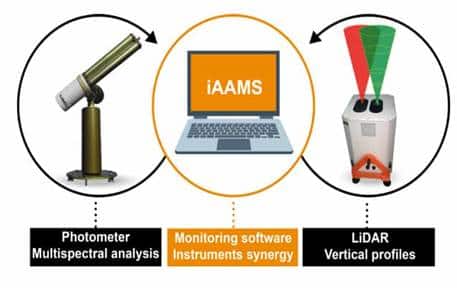
Actually, CIMEL also provides instrument synergies between Photometers and LiDARs through a unique monitoring software iAAMS, dedicated to the aerosols study and analysis. The obtained parameters are the characterization of aerosol types, the extinction and backscatter profile of mass concentration. Cimel’s AAMS is able to automatically locate, identify and quantify aerosols, layer by layer, day and night.